It is hard today to find an insurance software package that does not claim to have "artificial intelligence". For a broker, the risk is twofold: paying for a feature that serves no purpose day to day, or missing out on automations that would genuinely save hours every week. The useful question is therefore not "do we need AI?" but "which uses of AI are profitable in a broking firm, and how do we verify that?". This article reviews the proven use cases, those that still belong to marketing, and the method for assessing an AI project without being dazzled.
Reading and entering data for you: intelligent OCR
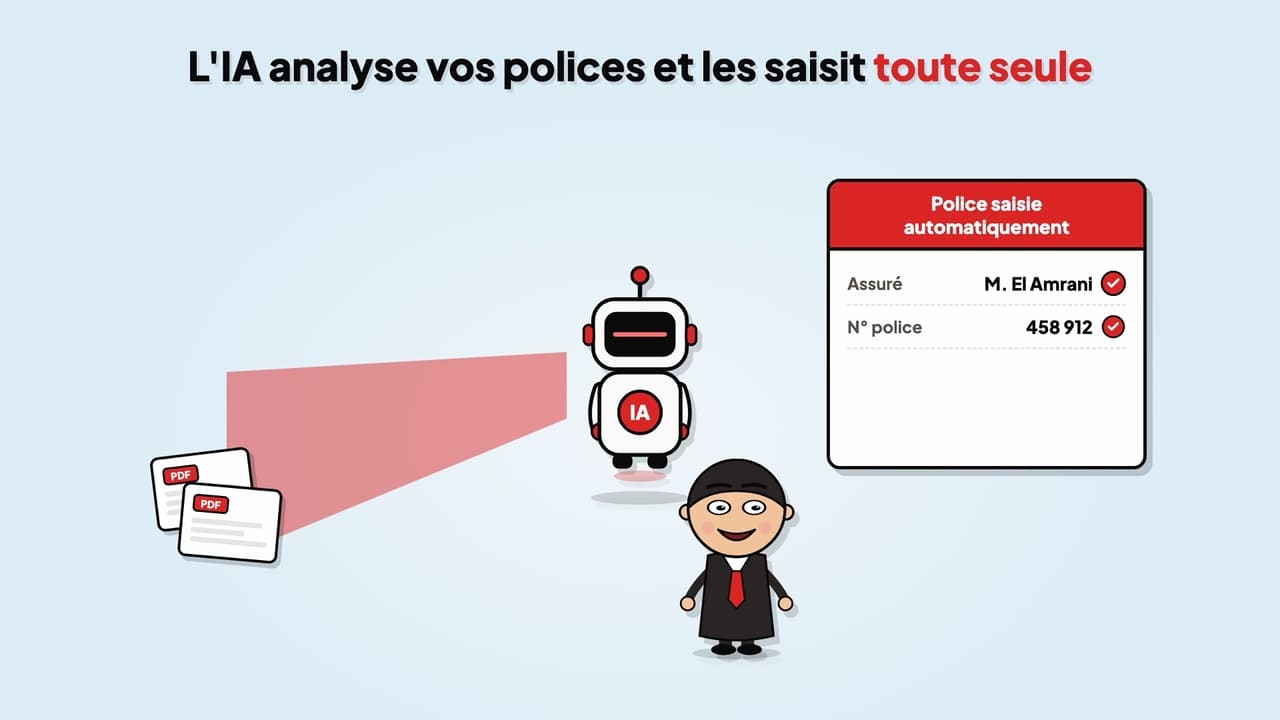
The first source of time savings in a firm is data entry. A broker spends a considerable part of their day retyping information from PDFs: particular conditions, insurance certificates, commission statements, claims documents. Intelligent OCR — AI-assisted automatic document reading — extracts this data and pre-fills the records, with a human check before validation.
It is one of the most profitable uses because it tackles a daily, repetitive and measurable task: you can quantify the number of documents processed and the time saved. It is also one of the safest, because the data remains verifiable. A good broking software package offers this automatic reading natively rather than as a gimmick option.
Sorting, routing and following up: flow automation
The second source is the handling of incoming flows. A firm receives dozens of emails every day: quote requests, claims notifications, missing documents, policyholder questions. AI today can classify these messages, route them to the right colleague and trigger automatic follow-ups — for example on a claims file that is missing a document.
- Automatic sorting and routing of incoming emails to the right handler.
- Automatic follow-up on incomplete claims files (missing documents).
- Scheduled renewal campaigns and unpaid-premium follow-ups.
- Assisted responses to policyholders' frequently asked questions.
Helping to sell: scoring and cross-selling
Beyond saving administrative time, AI also helps develop the portfolio. By analysing a policyholder's history, it can suggest relevant cross-selling opportunities (a health top-up for a client who only has motor cover, for example) or prioritise the prospects most likely to convert. These functions already exist among several French publishers.
Caution remains in order: a scoring model is only useful if it relies on clean data and remains a decision aid, not an autopilot. The value comes from the interplay between the AI's suggestion and the judgement of the broker, who knows their client. To understand more broadly what distinguishes a true AI agent from a mere chatbot, see our dedicated article (AI agent or chatbot: what are the differences and how do you choose?).
Assessing an AI project without being dazzled
The method for sorting the useful from the gimmick comes down to three questions. On which specific task in my daily work does this AI intervene? How much time does it really save me, and how do we measure it? Does the data remain verifiable and hosted in compliance with the GDPR? A serious publisher answers concretely; a vague pitch about "the power of AI" with no quantified use case should put you on alert.
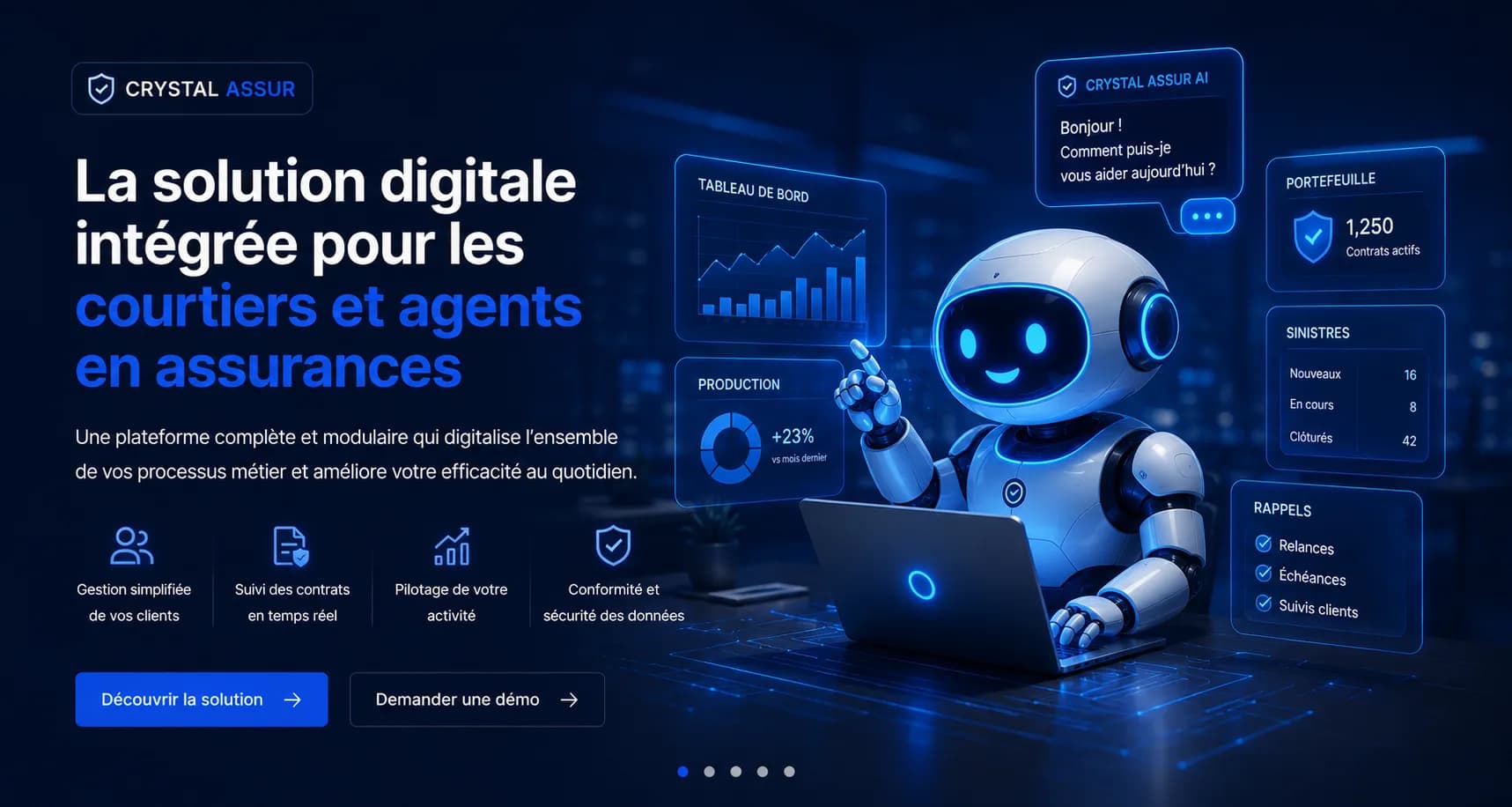
It is this pragmatic approach that CRYSTAL IT applies in CRYSTAL ASSUR, its broking software used by more than 500 firms and companies: AI there is put at the service of specific tasks — document OCR, claims management, automations — and not displayed as an empty selling point. CRYSTAL IT is now adapting its current version to the French market (Crystal Assur for insurance brokers in France). Before choosing a tool, take the time to compare the fundamental criteria: our guide to choosing broking software will help you (Insurance broker software: how to choose well in 2026?).
AI delivers on its promises in broking provided it is brought back to concrete uses: reading and entering documents for you, sorting and routing flows, following up on incomplete files, helping with cross-selling. These are repetitive, frequent and measurable tasks — exactly where automation pays off. Conversely, steer clear of spectacular demonstrations with no quantified use case. CRYSTAL IT designs CRYSTAL ASSUR in this spirit and is adapting its current version to the French market: describe the tasks you would like to automate, the first conversation is free and with no commitment.
Have a project or a question? Let's talk with a CRYSTAL IT expert.
Request a demo